
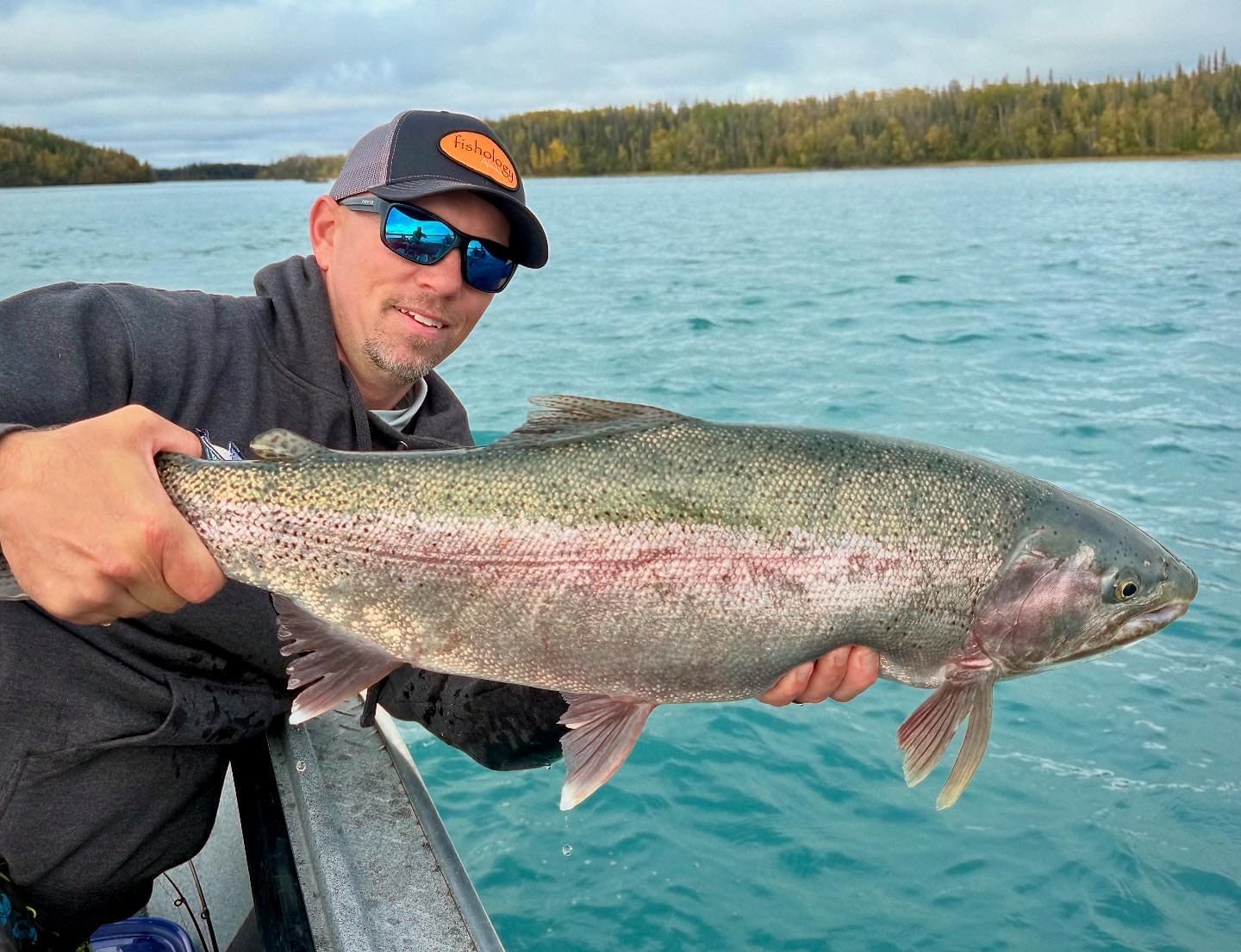
On the Kenai River the primary method of fly fishing for trout is the nymphing method with a floating fly line, an indicator, a long leader, some split shot, and a bead or flesh fly. Seems pretty simple, and it can be, but believe me when I tell you that there are a handful of true trout ninjas on the Kenai that pay attention to the tiniest of details, and have this seemingly simple system nailed down to a science.
One of the key factors in the system is the amount of weight that you use in order to keep your presentation down on the bottom and in the strike zone. If you’re not getting down, you’re not getting bit! With that being said, adding enough weight to stay on the bottom has a natural consequence, and that is that your indicator will regularly play tricks on you (jabbing, bobbing around, and temporarily sinking) creating hundreds of false strikes. All this has the potential to drive you completely insane if you don’t have a good strategy to deal with it.
If you make a full-on hook set each and every time the indicator gives you a jab, you’re pulling your bead or fly way out of the zone, piling fly line up at your feet, and as you struggle to get things under control and back in the strike zone, precious time ticks away. You don’t want to waste all that time, but you don’t want to miss bites…RIGHT?
The strategy that I’ve learned and developed to deal with this problem is called the “pop set.” I call it that because each time you implement it, your indicator makes a popping sound as it moves quickly & briefly under the water’s surface. The technique is pretty simple: when your indicator sinks and you’re unsure whether it’s a bite or not, rather than applying a full trout set in the traditional upward motion, quickly & forcefully jerk your fly rod in the downstream direction, keeping the rod low towards the water, and only move the indicator a foot or so. The quick, short, deliberate downstream jerking motion is just enough to set the hook if it’s a fish, but subtle enough to keep your drift going in the same lane if you just got faked out. This strategy is simply a way to take advantage of your knowledge of probability and statistics, but you don’t have to be a math whiz to know that more time in the strike zone equals more fish!
The next time your’e on the Kenai in pursuit of the trophy rainbow trout that inhabit it, try the pop set and see what the results you get. I’m willing to bet that it’ll simultaneously decrease your frustration and increase the number of trout that wind up in the net.
Comment *nombre 3 ninfas que necesito llevar el 21 de Agosto.
Nombre 3 streamers que necesito.
Nombre otras 3 moscas que necesitare. Gracias